

asked before an order
Cloth questions
The questions that come up between a cutting arriving and a curtain going up.
Fourteen of them, answered from what the company does and what the law says. Each opens on its own; a question that is not here goes to sales@interiorprodesigners.store.

Cuttings
What comes in the envelope, and when
How many cuttings can I ask for, and do they have to go back?
Up to six in one request, chosen from the library and posted free to any UK address. They are yours to keep: nothing needs sending back, and there is no account to make.
How will I know my cuttings have been posted?
Look the request up on the check page with its reference and your email. It shows Received until the envelope goes into the post, then Posted with the date. Nothing moves the status but the envelope itself.
Will the curtains match the cutting exactly?
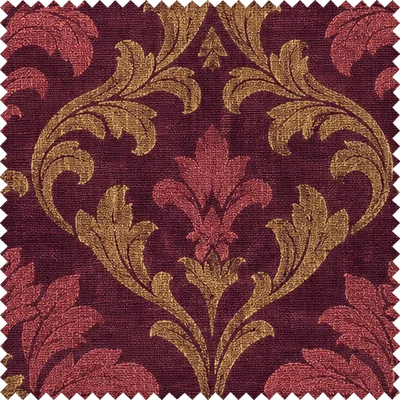
The cloth must match the cutting you chose it from, apart from any difference you were told about before ordering. Dyed cloth varies a little between rolls, so an order is cut from one roll where its length allows, and you are told before cutting if a second roll is needed.
Measuring
Widths, drops and repeats
Do you measure the windows?
Yes, at a measuring visit in Roystonhill, Blochairn and Provanmill, Sighthill, Springburn and Cowlairs, Port Dundas, and Robroyston and Millerston. Measurements taken at a visit are the company’s responsibility. Elsewhere, Measuring up shows how to measure and works the metres out.
Why does a patterned cloth take more metres than a plain one?
Every drop is rounded up to a whole number of pattern repeats, so the design lines up across every seam. A 260 cm drop on a 64 cm repeat is cut at 320 cm: over five widths that is 16 metres where a plain cloth would need 13. A half-drop pattern takes one repeat more again.
What fullness should I choose?
It follows the heading: about twice the track for a pencil pleat or eyelets, about two and a half times for pinch pleats, and for a wave heading whatever its track system sets. More fullness gives deeper folds and needs more cloth; the headings are drawn from above on Made up and hung.
How do I measure a recess for a Roman blind?
With a steel tape, measure the width at the top, the middle and the bottom of the opening: old openings are seldom square, and the narrowest of the three is the one that fits. A blind for inside the recess is made a centimetre narrower than that, so it runs without catching the ingo. Then measure the drop from the top of the recess to the sill.
Cloth
The layers, the rooms, the care
What is the difference between a lining, a thermal lining, blackout and an interlining?
Cotton sateen is the ordinary lining: it keeps the sun off the face cloth. A thermal lining has a coated back that holds warmth in the room. Blackout stops the light outright, and dim-out sits between the two. An interlining, bump or the lighter domette, goes between the face and the lining to give the curtain body and keep warmth in.
Which curtain fabric can go in a café, a salon or an office?
Whatever the building’s fire risk assessment asks for. The British Standard for curtains and blinds in such rooms is BS 5867-2:2008, and fabric for them is supplied only where its manufacturer certifies that performance for that cloth, with the certificate.
How are the curtains cleaned?
As the care given with the cloth says, which follows its fibres. Lined and interlined curtains are usually dry cleaned once made up, because their layers can shrink by different amounts. The care for every cloth is on its cutting’s label and in the library.
Orders
Buying, cancelling, and where the work goes
Can I buy cloth without having it made up?
Yes. Face cloth, linings, interlinings and the haberdashery a curtain or blind is built from are sold by the metre, with the cutting worked out for you in the cut plan or Measuring up.
Can I cancel an order?
Cloth, lining and haberdashery bought at your home or by email can be cancelled within 14 days of reaching you. Curtains and blinds made to measure are made to your specifications, so that right does not apply to them; nothing is cut until every measurement and choice has been confirmed in writing. Faults are always covered: see Delivery and returns.
Is the cord on a Roman blind made safe?
Every corded or chained blind the company fits goes up with its safety device, and its cleat is placed at least 1.5 metres from the floor, as the Office for Product Safety and Standards advises. The fold planner shows where the cleat can go at your window.
Do you work outside north Glasgow?
Measuring visits and fitting cover north and north-east Glasgow. Cuttings and cloth by the metre are posted to any address in the UK, and curtains made up from your own measurements can be posted ready to hang.
A question that is not here
Write it down with the window it is about, and it is answered within two working days. If it is about a request already sent, put the reference in.